Note
Go to the end to download the full example code.
Bunny#
Repair the holes in the bunny mesh.
# sphinx_gallery_thumbnail_number = 2
import pyvista as pv
from pyvista import examples

from pymeshfix import MeshFix
bunny = examples.download_bunny()

# Define a camera position that shows the holes in the mesh
cpos = [(-0.2, -0.13, 0.12), (-0.015, 0.10, -0.0), (0.28, 0.26, 0.9)]

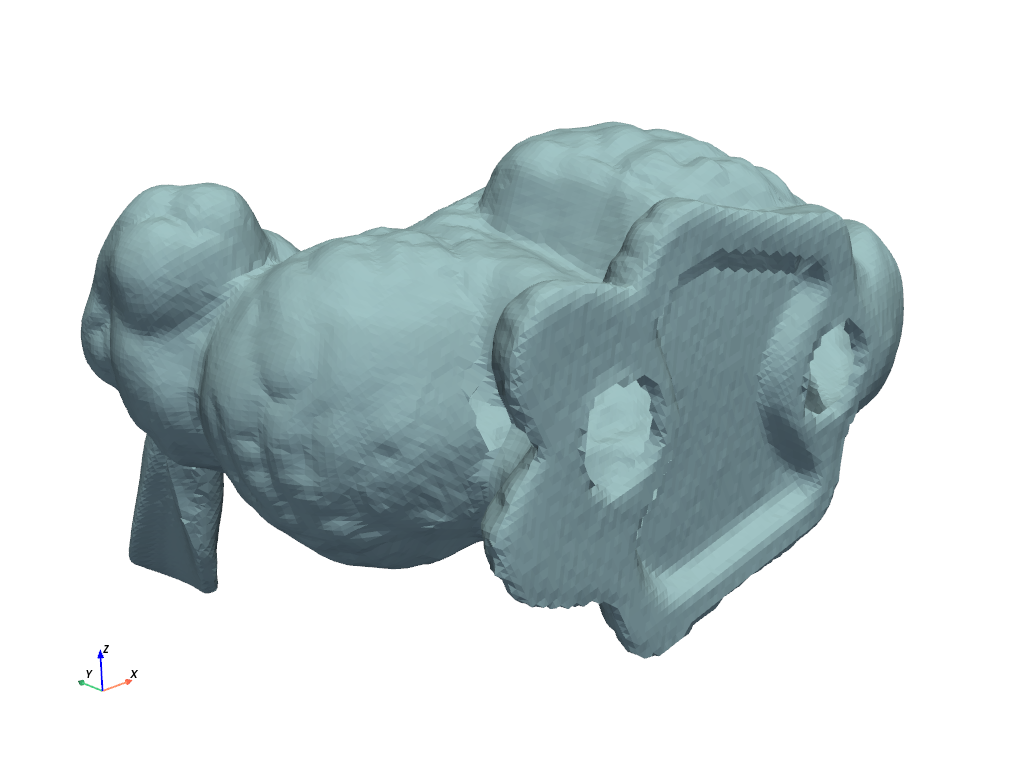
# Show mesh
bunny.plot(cpos=cpos, eye_dome_lighting=True, anti_aliasing=True, smooth_shading=True)
Create an instance of pymeshfix.MeshFix from pyvista.PolyData.
mfix = MeshFix(bunny, verbose=True)
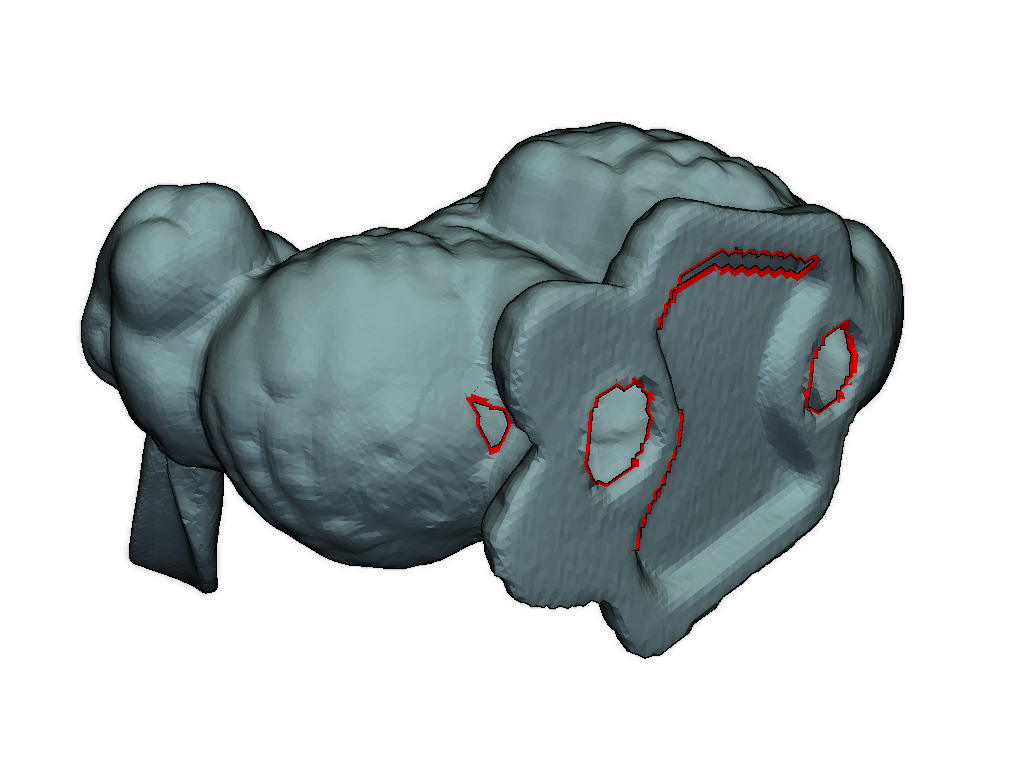
holes = mfix.extract_holes()
Render the mesh and outline the holes
pl = pv.Plotter()
pl.add_mesh(bunny, color=True, smooth_shading=True)
pl.add_mesh(holes, color="r", line_width=12, render_lines_as_tubes=True, lighting=False)
pl.camera_position = cpos
pl.enable_eye_dome_lighting()  # helps depth perception
pl.enable_anti_aliasing("ssaa")
pl.show()
Repair the mesh
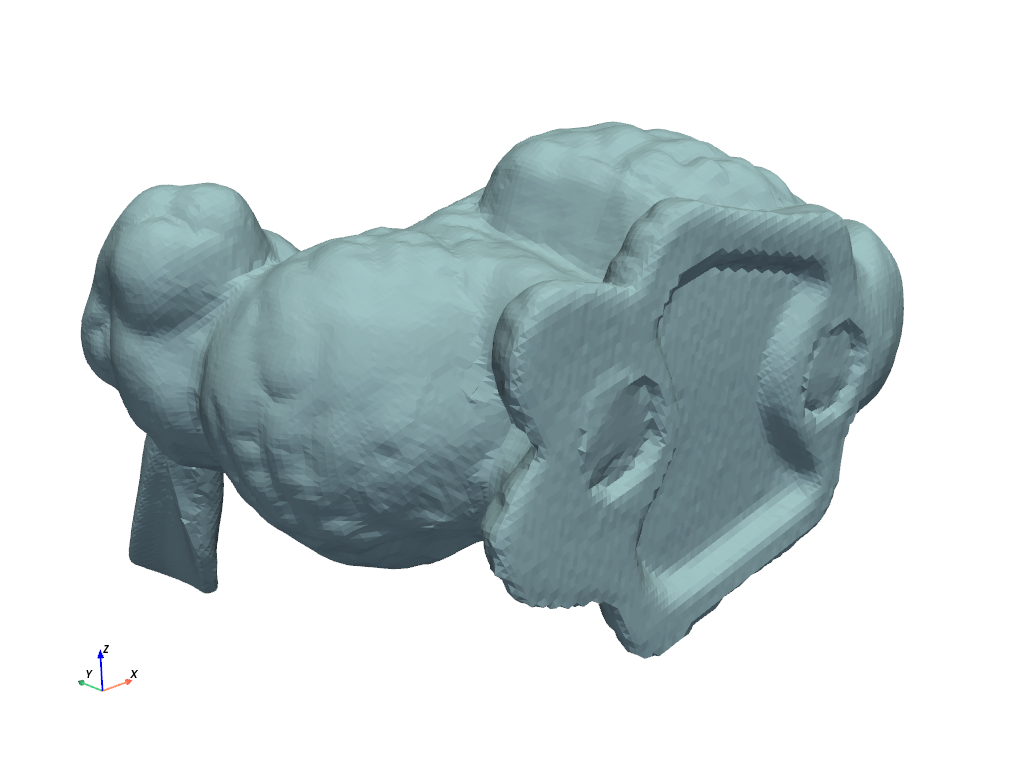
mfix.repair()
Show the repaired mesh
mfix.mesh.plot(cpos=cpos, eye_dome_lighting=True, anti_aliasing=True, smooth_shading=True)
Total running time of the script: (0 minutes 4.378 seconds)